


How to Balance Aesthetics and Practical Directional Functionality in House Number Signage in Modern Office Space Design?
Release Time : 2026-05-27
In modern office space design, house number signage not only plays a crucial role in area identification and information guidance but has also become an important component in enhancing the aesthetics of the office environment and corporate image. As office spaces evolve towards intelligence, modernization, and personalization, traditional, single-function doorplates are no longer sufficient to meet the needs of businesses for spatial design and brand display.
1. Unified Design Style Enhances Overall Spatial Harmony
As part of the visual system of an office space, the design style of the house number needs to be consistent with the overall decoration environment. If the doorplate style is inconsistent with the office space style, it can easily affect the overall visual effect. Therefore, the design process requires overall planning that incorporates corporate culture, spatial color scheme, and decoration style. For example, in a modern minimalist office environment, materials such as brushed metal, acrylic, or frosted glass can be used, paired with simple fonts and line designs to enhance the technological and sophisticated feel of the space; while in a creative office space, personalized graphic elements and artistic designs can be added to make the doorplate more visually distinctive. A unified design style not only enhances the overall aesthetics of the office environment but also elevates the company's brand image.
2. Optimize Font and Color Schemes to Improve Recognition Efficiency
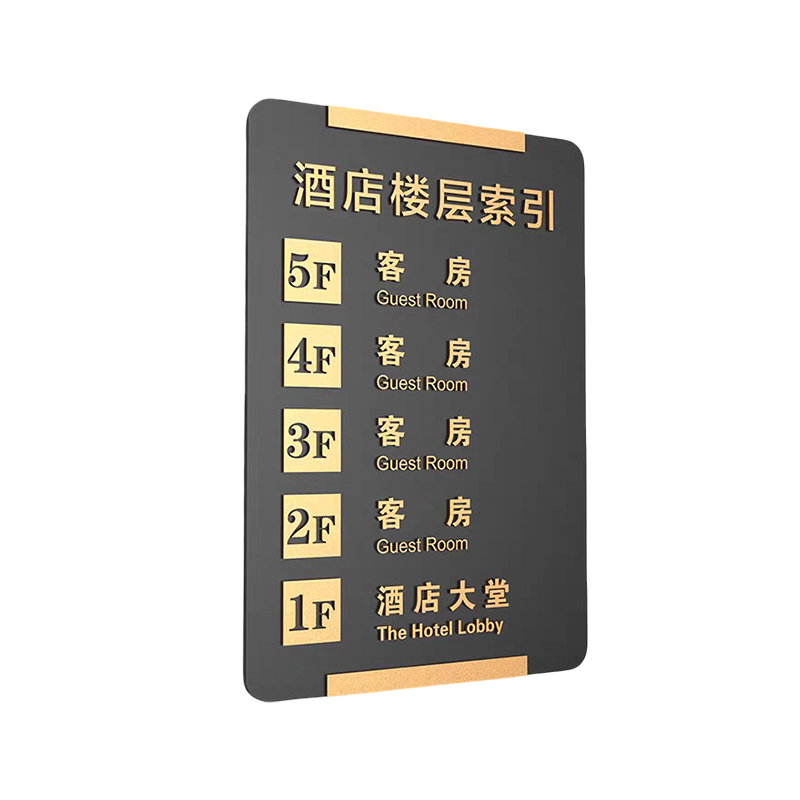
The core function of house numbers remains information guidance; therefore, the design of fonts and colors directly impacts recognition. Overly complex fonts or insufficient color contrast can make them difficult to read. Thus, a balance between aesthetics and practicality must be found in modern office spaces. For example, clear and legible sans-serif fonts can improve long-distance recognition; simultaneously, contrasting light and dark color schemes enhance information visibility. Color-coded design can also improve spatial orientation efficiency in different functional areas. For instance, a unified color scheme for meeting rooms and a different scheme for administrative offices allows for quick identification of areas, thereby improving overall work efficiency.
3. Select Materials Appropriately to Enhance Decoration and Durability
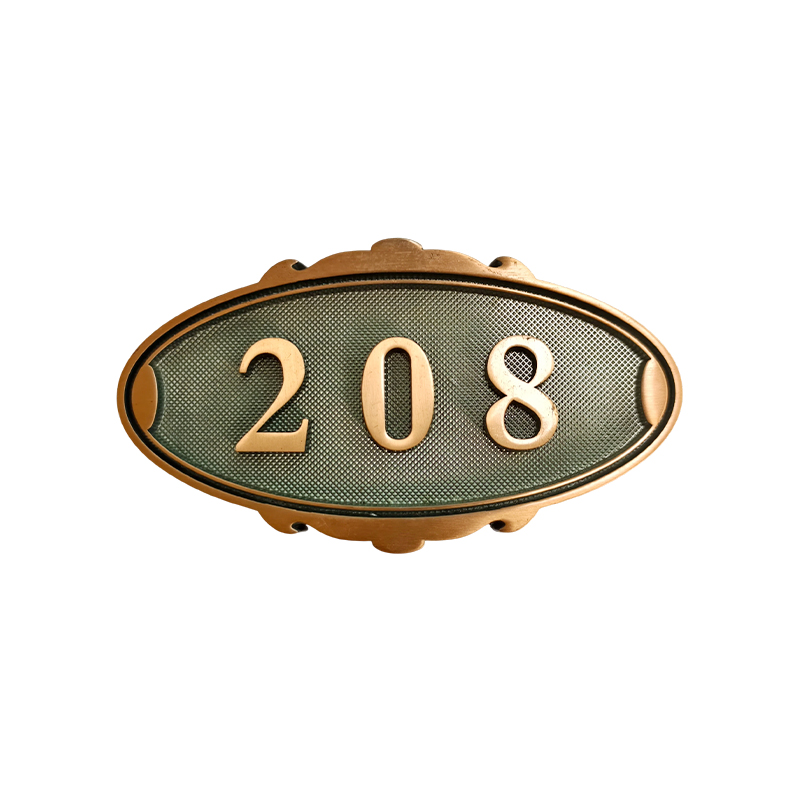
Modern office door signs not only need to be aesthetically pleasing but also durable. Due to frequent personnel movement in the office environment, poor-quality materials are prone to wear, fading, or deformation. Therefore, materials must be selected appropriately based on the intended use environment during the sign production process. For example, stainless steel offers strong corrosion resistance and a modern look, making it suitable for high-end office areas; acrylic provides excellent light transmission, enhancing the space's stylishness; while wood is better suited for office spaces that emphasize a natural atmosphere. Furthermore, processing methods such as UV printing, laser engraving, and baking paint can improve the overall texture and visual appeal of the doorplates, making them both decorative and practical.
4. Enhancing Wayfinding Experience with Intelligent Technology
With the continuous development of intelligent office systems, house number design is also upgrading towards digitalization and intelligence. For example, in modern office buildings and large office parks, more and more companies are adopting electronic doorplate systems. Through LED displays, e-ink screens, or intelligent sensing technology, not only can departmental information and meeting schedules be updated in real time, but the overall technological feel can also be enhanced. At the same time, some intelligent doorplates can also be linked with office management systems to realize functions such as personnel appointments, visitor navigation, and information inquiries, thereby improving office space management efficiency. Compared to traditional static doorplates, intelligent doorplates, while fulfilling wayfinding functions, further enhance the technological atmosphere of modern office environments.
5. Emphasize Detailed Layout to Enhance the User Experience
The installation location and layout of house numbers significantly impact their effectiveness. If the installation height is inappropriate or the view is obstructed, even an aesthetically pleasing design will fail to provide effective wayfinding. Therefore, office space planning requires a rational layout based on pedestrian traffic flow and visual habits. For example, placing prominent signage at corridor corners, elevator entrances, and functional area entrances can improve spatial recognition efficiency. Furthermore, incorporating backlighting, luminescence, or reflective elements can enhance visibility in low-light environments, ensuring good wayfinding throughout the office space.
As modern office environments continue to evolve, house numbers have evolved from traditional information signage into a crucial component combining wayfinding functionality with spatial aesthetics. By unifying design styles, optimizing font colors, selecting appropriate materials, and integrating intelligent technologies, not only can the overall aesthetics of the office space be improved, but actual usability can also be enhanced, creating a more professional, efficient, and modern office environment for businesses.
1. Unified Design Style Enhances Overall Spatial Harmony
As part of the visual system of an office space, the design style of the house number needs to be consistent with the overall decoration environment. If the doorplate style is inconsistent with the office space style, it can easily affect the overall visual effect. Therefore, the design process requires overall planning that incorporates corporate culture, spatial color scheme, and decoration style. For example, in a modern minimalist office environment, materials such as brushed metal, acrylic, or frosted glass can be used, paired with simple fonts and line designs to enhance the technological and sophisticated feel of the space; while in a creative office space, personalized graphic elements and artistic designs can be added to make the doorplate more visually distinctive. A unified design style not only enhances the overall aesthetics of the office environment but also elevates the company's brand image.
2. Optimize Font and Color Schemes to Improve Recognition Efficiency
The core function of house numbers remains information guidance; therefore, the design of fonts and colors directly impacts recognition. Overly complex fonts or insufficient color contrast can make them difficult to read. Thus, a balance between aesthetics and practicality must be found in modern office spaces. For example, clear and legible sans-serif fonts can improve long-distance recognition; simultaneously, contrasting light and dark color schemes enhance information visibility. Color-coded design can also improve spatial orientation efficiency in different functional areas. For instance, a unified color scheme for meeting rooms and a different scheme for administrative offices allows for quick identification of areas, thereby improving overall work efficiency.
3. Select Materials Appropriately to Enhance Decoration and Durability
Modern office door signs not only need to be aesthetically pleasing but also durable. Due to frequent personnel movement in the office environment, poor-quality materials are prone to wear, fading, or deformation. Therefore, materials must be selected appropriately based on the intended use environment during the sign production process. For example, stainless steel offers strong corrosion resistance and a modern look, making it suitable for high-end office areas; acrylic provides excellent light transmission, enhancing the space's stylishness; while wood is better suited for office spaces that emphasize a natural atmosphere. Furthermore, processing methods such as UV printing, laser engraving, and baking paint can improve the overall texture and visual appeal of the doorplates, making them both decorative and practical.
4. Enhancing Wayfinding Experience with Intelligent Technology
With the continuous development of intelligent office systems, house number design is also upgrading towards digitalization and intelligence. For example, in modern office buildings and large office parks, more and more companies are adopting electronic doorplate systems. Through LED displays, e-ink screens, or intelligent sensing technology, not only can departmental information and meeting schedules be updated in real time, but the overall technological feel can also be enhanced. At the same time, some intelligent doorplates can also be linked with office management systems to realize functions such as personnel appointments, visitor navigation, and information inquiries, thereby improving office space management efficiency. Compared to traditional static doorplates, intelligent doorplates, while fulfilling wayfinding functions, further enhance the technological atmosphere of modern office environments.
5. Emphasize Detailed Layout to Enhance the User Experience
The installation location and layout of house numbers significantly impact their effectiveness. If the installation height is inappropriate or the view is obstructed, even an aesthetically pleasing design will fail to provide effective wayfinding. Therefore, office space planning requires a rational layout based on pedestrian traffic flow and visual habits. For example, placing prominent signage at corridor corners, elevator entrances, and functional area entrances can improve spatial recognition efficiency. Furthermore, incorporating backlighting, luminescence, or reflective elements can enhance visibility in low-light environments, ensuring good wayfinding throughout the office space.
As modern office environments continue to evolve, house numbers have evolved from traditional information signage into a crucial component combining wayfinding functionality with spatial aesthetics. By unifying design styles, optimizing font colors, selecting appropriate materials, and integrating intelligent technologies, not only can the overall aesthetics of the office space be improved, but actual usability can also be enhanced, creating a more professional, efficient, and modern office environment for businesses.