


How can luminous characters improve overall stability and reliability through optimized heat dissipation structures?
Release Time : 2026-04-22
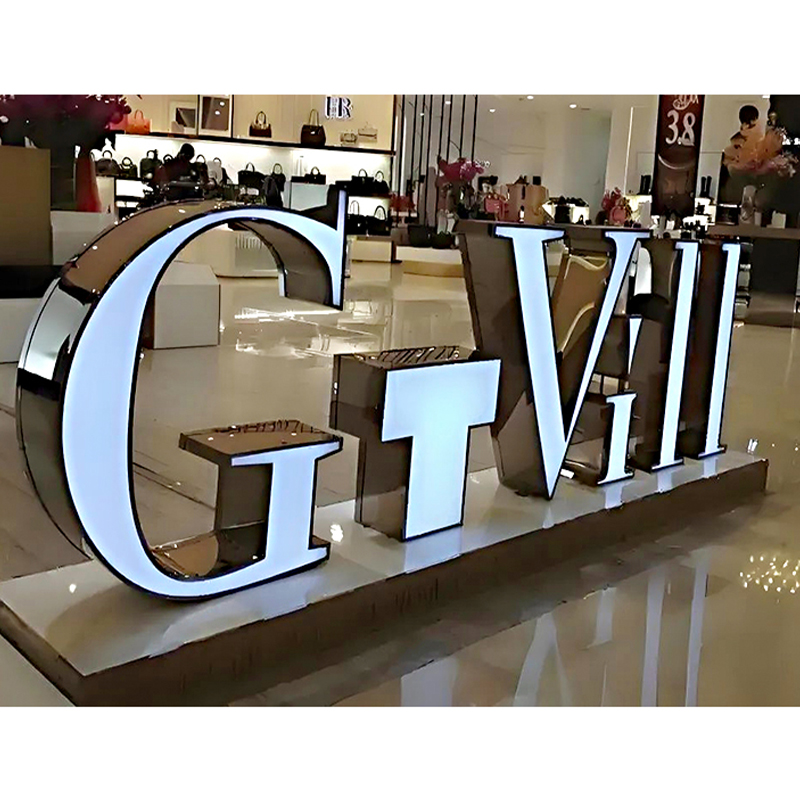
In modern urban wayfinding systems and commercial signage, luminous characters are widely used for nighttime wayfinding and brand display. Since they typically use LEDs as their light source, they continuously generate heat during long-term operation. Inadequate heat dissipation design can easily lead to accelerated light decay, color shift, and even component failure, thus affecting the overall display effect and lifespan. Optimizing the heat dissipation structure design to improve the stability and reliability of luminous characters is a crucial aspect of their engineering design.
1. Optimized Light Source Layout Reduces Localized Heat Accumulation
The distribution of LED light sources inside luminous characters directly affects heat distribution. Optimizing the arrangement of LEDs ensures even heat distribution, preventing localized overheating. Simultaneously, rationally controlling the light source density and power distribution helps reduce concentrated heat-generating areas, reducing heat dissipation pressure at the source.
2. Application of Thermally Conductive Materials Improves Heat Transfer Efficiency
Introducing highly thermally conductive materials, such as aluminum alloy substrates or thermally conductive composite materials, into the luminous character structure can quickly conduct the heat generated by the LEDs to the external structure.
3. Enhanced Airflow Through Heat Dissipation Structure Design
By designing heat dissipation grooves, ventilation holes, or honeycomb structures inside or on the back of the sign, airflow efficiency can be enhanced, promoting natural convection cooling. This passive cooling method effectively reduces temperature without increasing energy consumption, while maintaining a simple and aesthetically pleasing structure.
4. Optimized Shell Structure for Improved Heat Dissipation
The shell of luminous characters not only provides protection but also serves as a crucial heat dissipation carrier. Using a metal shell or thermally conductive coating allows for rapid heat transfer from the interior to the exterior surface, where it is dissipated through the air. Simultaneously, appropriately increasing the heat dissipation area of the shell, such as by incorporating heat dissipation fins, further improves heat dissipation efficiency.
5. Coordinated Control of Thermal Management and Electrical Systems
In intelligent illuminated signage, the luminous intensity can be dynamically adjusted through a temperature monitoring and control system. When the temperature rises, the system can appropriately reduce brightness or adjust the operating mode to reduce heat generation. This active thermal management approach, combined with structural heat dissipation design, significantly improves overall operational reliability.
In summary, luminous characters signage can effectively improve heat dissipation performance through optimized light source layout, application of thermally conductive materials, heat dissipation structure design, and the synergistic effect of the casing and intelligent control system. This multi-layered heat dissipation optimization scheme not only enhances the stability of the lighting system but also significantly improves its long-term operational reliability and service life.
1. Optimized Light Source Layout Reduces Localized Heat Accumulation
The distribution of LED light sources inside luminous characters directly affects heat distribution. Optimizing the arrangement of LEDs ensures even heat distribution, preventing localized overheating. Simultaneously, rationally controlling the light source density and power distribution helps reduce concentrated heat-generating areas, reducing heat dissipation pressure at the source.
2. Application of Thermally Conductive Materials Improves Heat Transfer Efficiency
Introducing highly thermally conductive materials, such as aluminum alloy substrates or thermally conductive composite materials, into the luminous character structure can quickly conduct the heat generated by the LEDs to the external structure.
3. Enhanced Airflow Through Heat Dissipation Structure Design
By designing heat dissipation grooves, ventilation holes, or honeycomb structures inside or on the back of the sign, airflow efficiency can be enhanced, promoting natural convection cooling. This passive cooling method effectively reduces temperature without increasing energy consumption, while maintaining a simple and aesthetically pleasing structure.
4. Optimized Shell Structure for Improved Heat Dissipation
The shell of luminous characters not only provides protection but also serves as a crucial heat dissipation carrier. Using a metal shell or thermally conductive coating allows for rapid heat transfer from the interior to the exterior surface, where it is dissipated through the air. Simultaneously, appropriately increasing the heat dissipation area of the shell, such as by incorporating heat dissipation fins, further improves heat dissipation efficiency.
5. Coordinated Control of Thermal Management and Electrical Systems
In intelligent illuminated signage, the luminous intensity can be dynamically adjusted through a temperature monitoring and control system. When the temperature rises, the system can appropriately reduce brightness or adjust the operating mode to reduce heat generation. This active thermal management approach, combined with structural heat dissipation design, significantly improves overall operational reliability.
In summary, luminous characters signage can effectively improve heat dissipation performance through optimized light source layout, application of thermally conductive materials, heat dissipation structure design, and the synergistic effect of the casing and intelligent control system. This multi-layered heat dissipation optimization scheme not only enhances the stability of the lighting system but also significantly improves its long-term operational reliability and service life.