
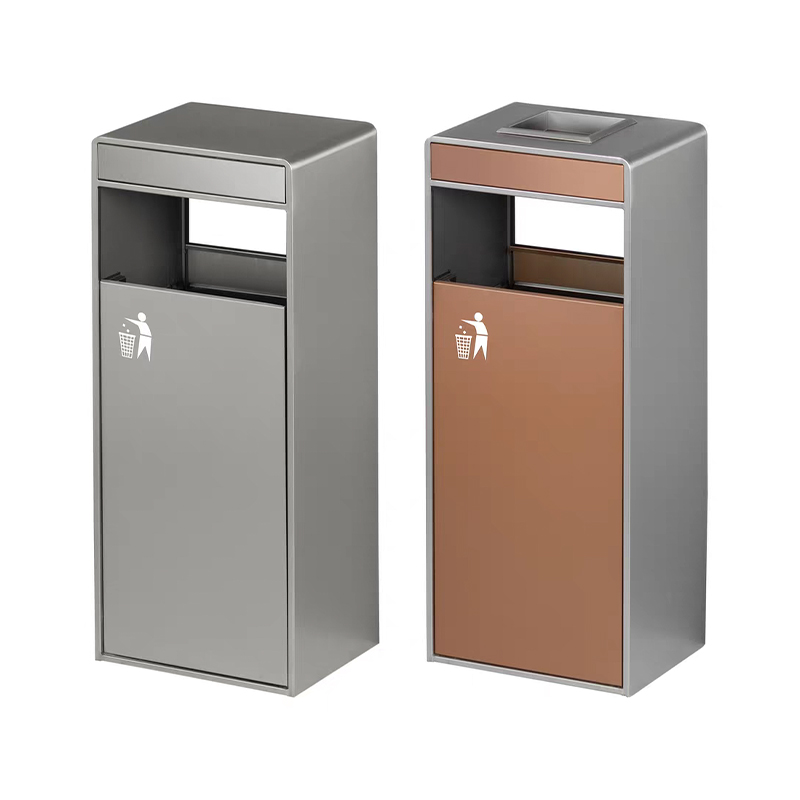





What effective technologies are used to prevent odors in the garbage cans next to the train station signs?
Release Time : 2026-03-10
As a vital transportation hub, the environmental sanitation of train stations directly impacts passenger travel experience and the city's image. Garbage cans, located next to signs and markers, are key facilities for waste collection, making odor control particularly important. Effective odor control technology not only reduces odor diffusion but also prevents the growth of germs, creating a clean and comfortable waiting environment for passengers.
Physical adsorption technology is a common method for odor control in garbage cans. By placing adsorbent materials such as activated carbon inside or on top of the garbage can, their porous structure adsorbs odor molecules from the air, achieving a deodorizing effect. Activated carbon has a strong adsorption capacity, effectively capturing major odor components such as hydrogen sulfide and ammonia. It is easy to replace, low in cost, and suitable for widespread application in public places such as train stations.
Chemical deodorization technology neutralizes or decomposes odor molecules through chemical reactions. For example, spraying plant essential oil deodorizers inside the garbage cans allows the active ingredients in these deodorizers to react with odor molecules, converting them into odorless or low-odor substances. Plant-based essential oil deodorizers are not only highly effective at eliminating odors but also natural and environmentally friendly, causing no secondary pollution. Their refreshing scent can even improve air quality around the garbage can.
Biological deodorization technology has also seen some application in garbage can odor control in recent years. This technology utilizes the metabolic processes of microorganisms to decompose odorous substances, converting them into harmless substances such as carbon dioxide and water. For example, placing deodorizing blocks containing effective microbial communities inside the garbage can inhibits the activity of odor-causing microorganisms in the garbage, slowing down the decomposition process and thus reducing odor production. Biological deodorization technology has advantages such as no secondary pollution and low maintenance costs, making it particularly suitable for treating odors from organic waste.
Ventilation and exhaust technology is an important means of improving the air quality inside garbage cans. By installing vents or small exhaust fans on the garbage can, internal air circulation is accelerated, allowing odors to be expelled promptly and reducing odor accumulation. Some train stations also use intelligent sensor-operated garbage cans that automatically activate the exhaust function when garbage is disposed of, further improving ventilation. In addition, the sealing design of garbage cans is crucial. Good sealing performance prevents odors from leaking out and avoids rainwater and dust entering the garbage can, keeping the internal environment dry and clean.
The material choice of garbage cans also affects odor control. Stainless steel, due to its corrosion resistance and ease of cleaning, is the preferred material for garbage cans in train stations. Its smooth surface effectively reduces garbage residue and the risk of bacterial growth, thus reducing odor. Furthermore, some garbage cans also use antibacterial coating technology to further inhibit bacterial growth and improve odor control.
The rational layout and regular cleaning and maintenance of garbage cans are also key aspects of odor control. Train stations should scientifically determine the number and location of garbage cans based on passenger flow and garbage generation to avoid garbage overflow or prolonged accumulation. At the same time, a strict cleaning system should be established, with regular rinsing and disinfection of garbage cans and timely replacement of garbage bags to ensure the cleanliness and hygiene of the inside of the garbage cans, reducing odor generation at its source.
In summary, odor control in garbage cans next to train station signs requires a comprehensive approach, utilizing various technologies such as physical adsorption, chemical deodorization, biodecomposition, and ventilation, combined with material selection and routine maintenance to form a systematic and efficient odor control system. This not only helps improve the environmental hygiene of the train station but also provides passengers with a more comfortable and healthy travel environment.