


How to achieve a balance between texture uniformity and wear resistance in the surface brushing treatment of 304 stainless steel signage cans?
Release Time : 2026-02-11
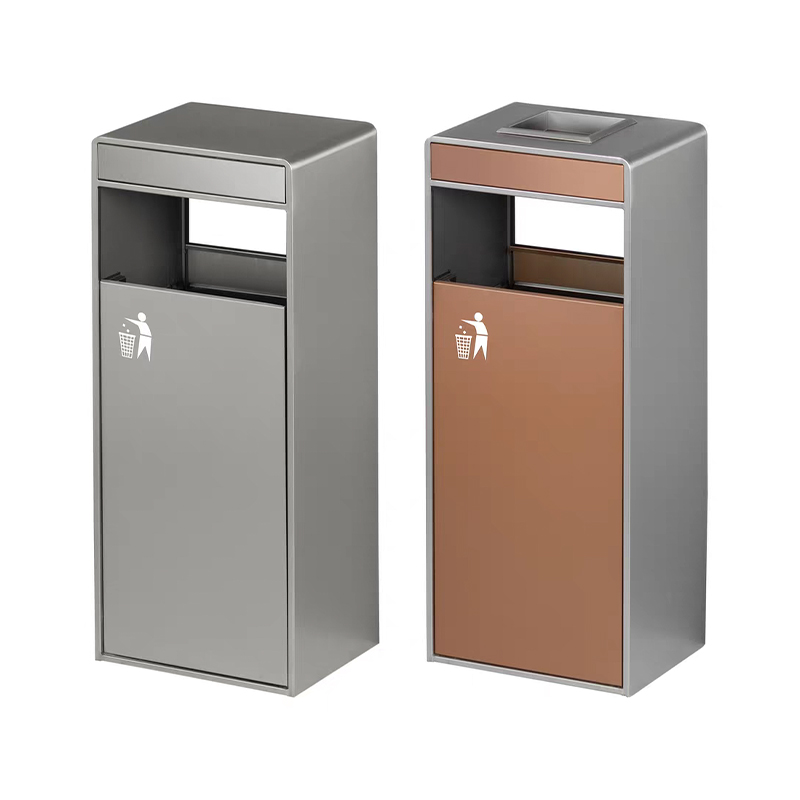
The brushed finish on 304 stainless steel signage/garbage cans requires finding a precise balance between texture uniformity and abrasion resistance. This depends on meticulous control of process parameters and is closely related to material properties, equipment performance, and operational procedures. The core of brushing is creating regular linear textures on the stainless steel surface through mechanical friction. This enhances visual appeal and strengthens surface abrasion resistance through the microscopic texture's uneven structure. However, over-processing or parameter deviations can lead to uneven textures or decreased abrasion resistance.
Achieving texture uniformity primarily depends on the selection and matching of abrasive belts or grinding tools. In the brushing process, the grit size of the abrasive belt, the flexibility of the substrate, and the properties of the binder directly affect the fineness and consistency of the texture. For example, using medium-fine grit abrasive belts (320# to 400#) ensures a clear texture while avoiding obvious scratches from excessively coarse grit or blurred textures from excessively fine grit. Furthermore, controlling the tension of the abrasive belt is crucial: too little tension can cause slippage, resulting in uneven texture depth; too much tension may shorten the belt's lifespan or even cause texture deformation due to localized overheating. In practice, the coordinated action of the tension adjustment device and the contact rollers is necessary to ensure uniform and stable contact pressure between the abrasive belt and the stainless steel surface.
Improved wear resistance is closely related to the planning of the drawing direction and surface hardening treatment. Straight-line graining, due to its single processing direction, exhibits weaker wear resistance in the vertical direction. Cross-graining or snowflake-like graining, through multi-directional grinding, can form more complex texture structures, effectively dispersing friction and extending service life. Simultaneously, post-drawing surface hardening processes, such as low-temperature polishing or special coating treatments, can further enhance surface hardness. For example, oil-based abrasive drawing, through lubrication and cooling with a grinding fluid, can reduce the heat impact of processing, preventing material softening and subsequent reduction in wear resistance, while also resulting in a finer texture and more uniform gloss.
Equipment precision and operational procedures are key to balancing these two aspects. High-precision abrasive drawing machines must be equipped with an adjustable speed drive system and a multi-axis linkage control device to ensure the workpiece maintains a stable movement trajectory during processing, avoiding texture misalignment caused by vibration or displacement. Operators must dynamically adjust parameters such as feed speed and grinding pressure according to the thickness, hardness, and target texture effect of the stainless steel. For example, when processing thinner sheets, the feed rate needs to be reduced to prevent deformation; when processing high-hardness materials, the grinding pressure needs to be appropriately increased to ensure texture clarity.
Environmental factors are equally important. The wire drawing workshop must maintain a constant temperature and humidity to avoid temperature fluctuations that could cause thermal expansion and contraction of the material, leading to texture deformation. Furthermore, dust generated during processing must be promptly removed using a high-efficiency dust removal system to prevent particles from embedding in the abrasive belt or adhering to the workpiece surface, causing texture defects or reduced wear resistance.
From a material properties perspective, the chemical composition and microstructure of 304 stainless steel provide a fundamental guarantee for wire drawing. Its high chromium content forms a dense chromium oxide protective film on the surface, effectively resisting corrosion and wear; while the addition of nickel enhances the material's toughness and processing performance, making the drawn texture more stable and less prone to peeling. This synergistic effect of material properties and the wire drawing process provides the material basis for balancing texture uniformity and wear resistance.
In practical applications, process parameters also need to be adjusted according to the specific usage scenario of the signage/garbage can. For example, outdoor garment cans require greater abrasion and corrosion resistance, so coarser-grit abrasive belts and cross-brushing techniques can be used, along with surface hardening treatment. In contrast, indoor decorative garment cans can focus on aesthetic texture, employing fine-grit abrasive belts and straight-line brushing techniques, with fine polishing to improve gloss uniformity. This differentiated approach further enhances the balance between functionality and aesthetics achieved through brushing techniques.